

10 sailing knots all boaters should know
08 December 2025
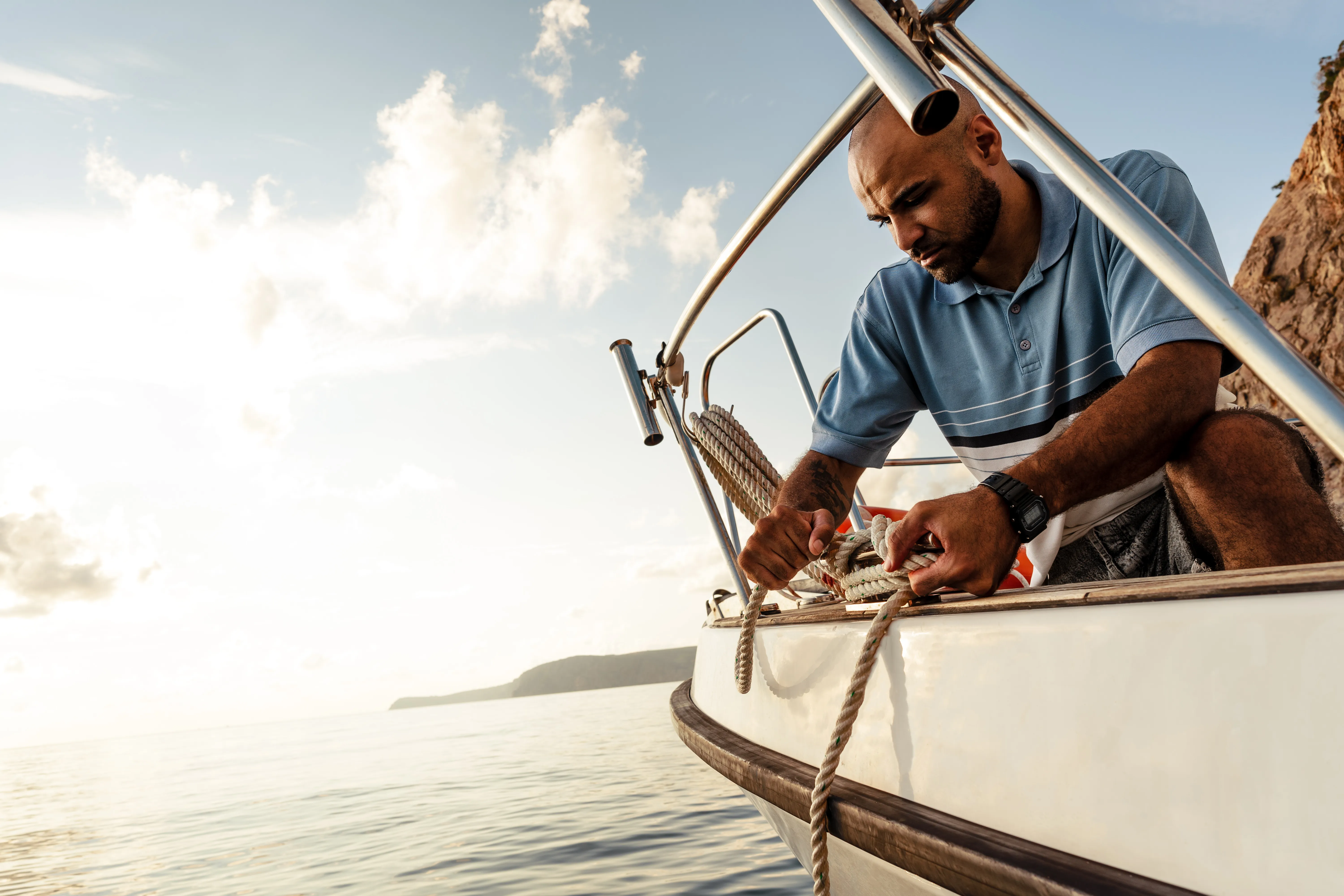
Knots can be used to perform a whole variety of tasks on a boat. Which means understanding the right knot to use and how to tie it correctly can make your boating adventures far more efficient.
Here, we explain why knots are important in boating and share 10 essential sailing knots that every boater should know.
Why are knots important in boating?
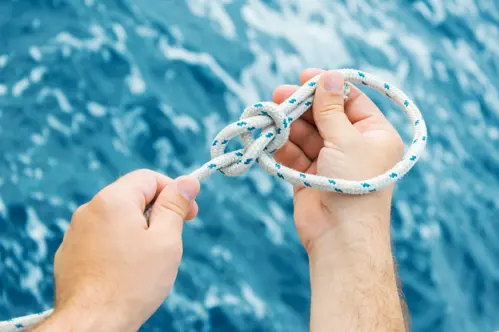
Knots are crucial as they allow boaters to control, secure, and adjust lines safely and effectively. On a boat, ropes are used for various tasks, including tying the boat to a dock, adjusting the sails, anchoring, towing, and securing gear. Using the wrong type of knot or tying it incorrectly can cause it to slip, come undone, or weaken under load. This can lead to accidents, damage, or even injury.
Some of the main reasons knots are essential include:
- Safety – Knots prevent lines from slipping or breaking under tension, keeping the boat and crew safe
- Control – Knots help manage sails, halyards, and lines efficiently, giving the sailor control
- Versatility – Different knots can be used for different tasks, such as joining ropes, creating loops, securing to posts or cleats, and adjusting tension
- Reliability under load – The right knot will hold under strain, but can often be easily untied when needed
- Efficiency – Knowing which knot to use and how to tie it saves time when docking, anchoring, and making sail adjustments
10 essential sailing knots
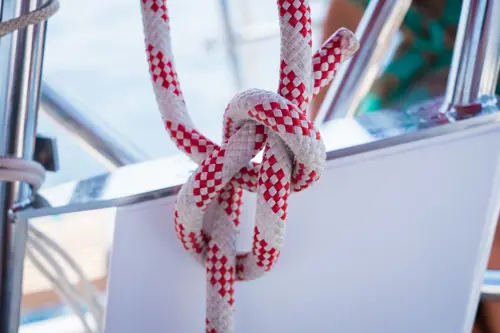
There are many different knots you can learn as a boater, and understanding these 10 essential knot types will help you with a range of tasks.
1. Bowline
A bowline creates a fixed loop at the end of a rope and can be used for mooring, tying around posts or rings, and even during rescue situations. Bowline knots are strong and secure under load and easy to tie. However, they can loosen when not under constant tension or if they’re not tied properly.
2. Clove hitch
A clove hitch is a simple knot that wraps a rope around a post or pole and crosses over itself. This knot is typically used for temporary fastening, securing fenders, and starting lashings. Clove hitch knots are easy to tie, adjustable, and versatile. Be aware that they can slip or come loose when subjected to constant load or excessive vibration.
3. Figure-of-eight
The figure-of-eight is a stopper knot that prevents a rope from slipping through a hole or block. This knot type is easy to inspect and very secure when tied correctly. However, it’s bulkier than many other knots and can be difficult to untie after a heavy load.
4. Reef knot
Another important knot for boaters. A reef knot features two ends of a rope tied together in an over-under pattern. This knot is used to join two similar ropes together and to tie sails. Reef knots are quick and easy to tie, and they lie flat when tied properly. Be mindful that they can slip under strain and aren’t suitable for heavy loads.
5. Round turn and two half-hitches
To tie this knot, the rope makes a complete loop around a post, and two half-hitches secure the end. It is typically used to moor boats and tie them to posts or rings. Round turn and two half-hitches knots are secure, reliable under load, and easy to adjust when required. If speed is a priority, keep in mind that these knots take slightly longer to tie than a simple clove hitch.
6. Rolling hitch
A rolling hitch is a friction knot that attaches a rope to another rope or pole and resists slipping along it. This makes it ideal for adjusting tension or securing a rope to a line under load. Rolling hitch knots hold tight when under load along another rope and are adjustable until they’re fully tightened. These knots have been known to jam when heavily loaded and are more complex than basic knots.
7. Sheet bend
A sheet bend joins two ropes of different diameters securely and can be used to tie lines together, extend rope length, and connect ropes of unequal thickness. This is a secure option for joining ropes of different sizes. Sheet bend knots are also easy to tie and untie. However, this knot type can slip when not tied tight enough and is less effective under extreme load, especially if the ropes are slippery.
8. Anchor hitch
An anchor hitch is a knot that secures a rope to a ring, post, or anchor shackle. It wraps around the object and tucks under itself, which makes it secure. Anchor hitch knots are typically used to secure anchors to chains or rings or attach lines to posts or heavy objects where a secure, load-bearing knot is needed. These knots are strong and reliable under heavy loads, unlikely to slip when tied correctly, and can handle tension well. Anchor hitches are slightly more complex than other knot types and can be difficult to untie.
9. Cleat hitch
The cleat hitch knot is specifically used to tie a rope to a cleat on a dock or boat. The rope wraps around the cleat in a figure-of-eight pattern and finishes with a half hitch. It’s ideal for mooring boats to docks and securing dock lines, fenders, or lines temporarily. Cleat hitches are quick and simple to tie and release. They also hold securely under tension and can be easily adjusted. Be mindful that if this knot type is tied incorrectly, it may slip under load.
10. Double fisherman’s knot
A double fisherman’s knot is a strong knot made by tying two double overhand knots around each other’s standing parts. It’s commonly used to join two ropes together, enabling boaters to extend the rope length when the ropes have similar or slightly different diameters. These knots are extremely secure and rarely slip, plus they’re neat and compact as well. Double fisherman’s knots can be difficult to untie after a heavy load and are not ideal when a quick release is required.
Specialist boat insurance through Craftinsure
Now you’ve learnt all about sailing knots, you may want to consider getting specialist boat insurance before you head back out on the water.
Specialist boat insurance through Craftinsure provides up to £5m third-party cover and protects your boat against loss or damage from fire or theft. Get an instant online quote today.
Please note the information provided on this page should not be taken as advice and has been written as a matter of opinion. For more on insurance cover and policy wording, see our homepage.