


Downwinding in your SUP: Your essential guide to getting started
30 June 2026
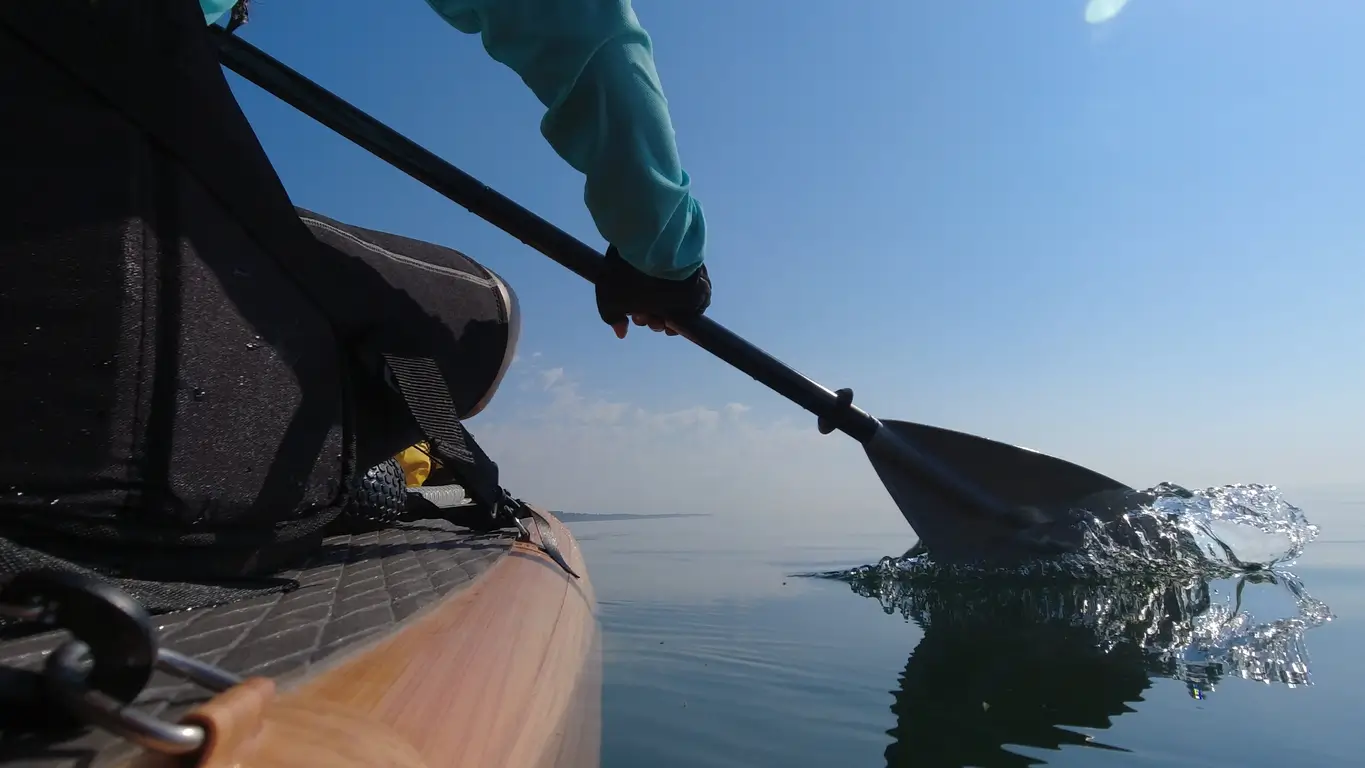
Most people begin their stand-up paddleboarding journey on calm, flat water, enjoying relaxed paddles and building confidence on the board. But if you're ready to push your skills to the next level and are looking for a great adrenaline rush, downwinding could be the sport for you.
In this guide, we’ll look at what exactly downwinding is and how to do it. Hop on your board. Let’s go.
What is downwinding?
Downwinding is a style of SUP where you paddle in the same direction as the wind and the waves, using their energy to propel you forward. Rather than simply paddling across the water, you're effectively surfing the rolling swells, catching one wave after another and gliding across the waves.
By combining powerful paddle strokes with balance, timing and board control, you can link these glides together, creating an exhilarating ride that many paddlers describe as feeling like flying over the water. You can travel remarkable distances with surprising speed and efficiency.
How to get into downwinding
Downwinding is a natural progression from paddleboarding on flat, calm water. It’s a cross between distance paddling and surfing. So if you’re wanting something a little more fast-paced to get your heart pumping, it’s a great sport to try.
The best way to get into the sport is to begin with official lessons. Your specialist instructor will take you out on the water to show you the basics. They’ll run through all the equipment and demonstrate the important techniques. You can find downwinding instructors at surf schools all over the country.
If you’re experienced on a paddleboard on calm water, you’ll have the basics of standing and paddling down, but the real difference lies in how you read the waves and weather conditions.
Understanding the conditions
It’s vital to understand the water conditions to be successful at downwinding. The wind is the most important factor in this sport. Winds above 15 knots create suitable bumps to ride, while winds that are 20-30 knots promise great conditions for experienced paddlers.
The wind creates swells, or waves, which paddlers ride, using the wind behind them to push them along. In general, the ocean has the best conditions, but if the weather is decent you can also do it on large lakes and estuaries.
How to downwind on a SUP: The essential technique
Downwind paddling is all about using the energy of wind-generated swells to propel your board forward with minimal effort. While it can take time to master, understanding the fundamentals will help you catch more bumps and enjoy longer, faster glides.
1. Start upwind and read the water
Begin at an upwind location and spend time scanning the water ahead. Look for areas where the surface is rising and the energy of the swell is building. Learning to identify these moving bumps is one of the most important skills in downwind paddling.
2. Accelerate onto the swell
Paddle with the wind at your back. As a swell approaches, increase your stroke rate and power. The goal is to accelerate the board until it matches the speed of the moving swell, allowing the board to lift and begin gliding.
3. Trim and steer the board
Once the board starts to glide, shift your weight slightly towards the tail to keep the nose from burying and maintain control. Use subtle foot pressure and paddle strokes to steer the board and stay on the most powerful part of the swell.
4. Connect one glide to the next
Rather than riding a single bump until it loses energy, look ahead for the next swell and angle the board towards it. Linking glides together is the key to successful downwind paddling. It allows you to maintain speed and travel long distances with less effort.
What equipment do you need for downwinding?
You’ll need the following equipment to start your downwinding journey:
The board
Downwind SUP boards are typically longer, narrower and lighter than standard paddleboards. This enables them to glide more efficiently across the water. Most downwind boards range from 14 to 18 feet in length and are constructed from lightweight materials to maximise speed and performance.
Board width plays an important role in stability and efficiency. Wider boards, around 28-30 inches, provide better stability and are often preferred by beginners. More experienced paddlers generally opt for narrower boards between 24 and 28 inches, which are typically faster and more responsive.
One of the main design features to look out for on a downwind board is its pronounced nose rocker (the upward curve at the front of the board). This helps prevent the nose from diving into the water when accelerating down the face of a swell. It’s essential for smoother and more controlled surfing between waves.
Paddle
Choosing the right paddle is just as important as choosing the right board.
A lightweight carbon fibre paddle is the best for downwind paddling. Its low weight helps reduce fatigue during longer sessions, while its stiffness provides efficient power with every stroke.
With this kind of paddle in your hands, you’ll be able to accelerate quickly when catching bumps and maintain speed more effectively between swells. Choosing the right blade size and paddle length can also improve your comfort, efficiency and overall performance on the water.
Leash
A leash is the most important piece of safety equipment in downwind paddling. Wind, waves and current can easily separate you from your board in seconds, especially in offshore conditions.
An SUP board is highly buoyant and can be blown away much faster than you can swim. A leash keeps your board attached to you at all times. Not only does it improve safety, but it also gives you peace of mind that your board isn’t going anywhere. So, you can focus on reading the water, catching swells and having fun.
Personal safety equipment
When you’re venturing offshore, safety should always be at the forefront of your mind.
The distance from shore, changing weather conditions and the physical demands of downwind paddling mean it can become unsafe quite quickly. The right safety equipment is essential.
Depending on the location, conditions and length of your paddle, you should consider carrying a personal flotation device (PFD), a hydration pack to maintain fluid intake and a mobile phone in a waterproof case for emergency communication.
You might also want to think about extra safety equipment, like GPS devices, marine radios and emergency locator beacons. They can provide valuable navigation assistance and a reliable means of calling for help if required.
Learn more about what to wear when paddleboarding.
Starting your downwind journey
Downwind paddling is a skill that develops with practice. As your experience grows, you'll become better at reading the water, anticipating where swells will form and timing your acceleration to catch them. Mastering these elements, along with balance and board control, will help you make the most of every downwind run.
Start in suitable conditions, paddle with friends whenever possible and always prioritise safety. Before long, you'll discover why so many paddlers become hooked on the thrill of chasing bumps and flying across open water.
So grab your board, check the forecast, and get out there. The next great glide is waiting for you.
Specialist paddleboard insurance through Craftinsure
Before your next trip out on the water, you may want to consider getting paddleboard insurance.
Specialist paddleboard insurance through Craftinsure can help provide financial protection against damage and the theft of your board and equipment, as well as up to 30 days of European cover. Get a quick online quote.
Please note the information provided on this page should not be taken as advice and has been written as a matter of opinion. For more on insurance cover and policy wording, see our homepage.